What Is a SaaS Application?
A SaaS (Software as a Service) application is software that users access through the internet instead of installing on their own computers or servers. Customers typically pay a recurring subscription fee in exchange for continuous access, updates, support, and improvements.
Most explanations stop there, but that definition misses what actually makes SaaS different. In practice, SaaS is not simply a software delivery method. It is a relationship model. Customers continue paying because the product continues delivering value month after month.
How SaaS Applications Work
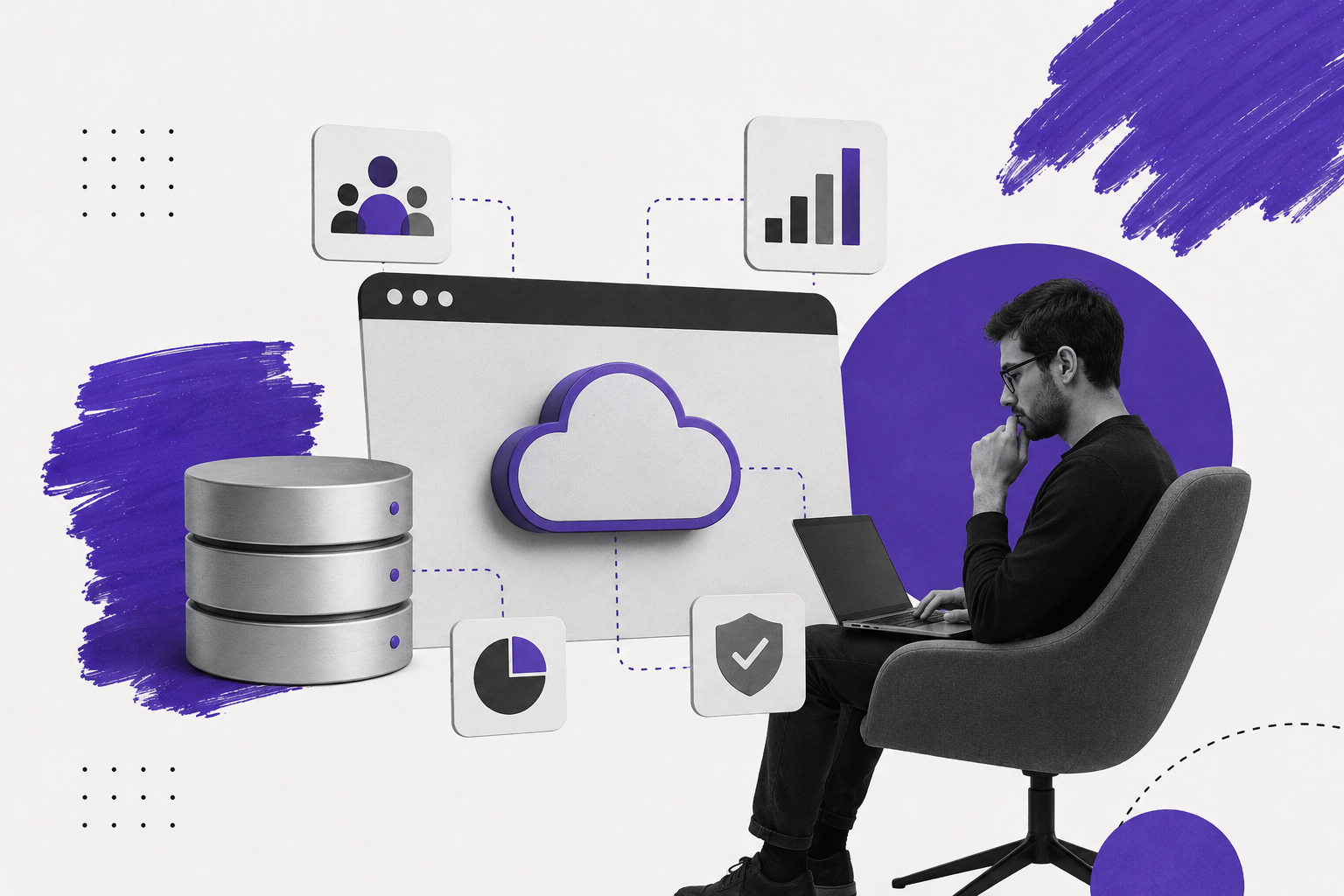
SaaS applications run on cloud infrastructure and are accessed through browsers or mobile apps. The provider handles maintenance, security, updates, backups, and scaling while customers focus on using the software.
- User authentication and permissions
- Subscription billing
- Cloud hosting and infrastructure
- Continuous software updates
- Data security and monitoring
- Customer support and onboarding
Real-World SaaS Examples
Many businesses use SaaS products daily without thinking about the business model behind them. Customer relationship management systems, accounting software, project management tools, email marketing platforms, and compliance software are all common SaaS categories.
One example is Aierpify, an e-invoicing and compliance platform built to help businesses automate invoice generation, reporting, and regulatory workflows. Instead of manually handling compliance tasks, businesses can automate repetitive processes and reduce operational risk.
SaaS vs Web App vs Marketplace vs Platform
These terms are often confused, but they solve different business problems.
- Web App: Software delivered through a browser.
- SaaS: A web app combined with subscriptions, support, and continuous delivery.
- Marketplace: Software that connects buyers and sellers.
- Platform: Software that allows third parties to build on top of it.
- Internal Tool: Software built for a single organization.
The Biggest Misconception About SaaS
The biggest misconception is that SaaS is simply software hosted online. The reality is that SaaS companies survive or fail based on retention. Every month, customers decide whether the product continues creating enough value to justify staying subscribed.
The strongest SaaS businesses eventually become part of a company's infrastructure. Removing them creates risk, inefficiency, or lost revenue.
Lessons Learned From Building Aierpify
When we started building Aierpify, we assumed invoicing would be the primary challenge. We quickly learned that compliance and edge cases were far more difficult than generating invoices.
Businesses operate in the real world, where data is incomplete, workflows vary, and exceptions happen constantly. Customers brought invoice corrections, refunds, legacy accounting imports, and compliance validation failures that were never visible during initial planning.
This experience taught us that customers live in exceptions, not happy paths. Successful SaaS products must be built around real-world behavior rather than ideal assumptions.
What Customers Say They Want vs What Actually Creates Value
Many early customers requested additional dashboards, reports, and analytics screens. Initially, those requests seemed important.
However, customer retention data revealed something different. Users stayed because the product reduced manual work, prevented errors, and increased confidence in compliance processes.
- Automation
- Error prevention
- Compliance validation
- Workflow simplification
Customers often describe solutions. Product teams must identify the underlying problem.
Why Most SaaS Products Fail
Most SaaS failures begin long before launch. Founders frequently build products before validating demand, creating solutions for problems that are interesting but not urgent.
- Insufficient market validation
- Wrong first features
- Slow time-to-value
- Poor retention
- Pricing mistakes
- Feature bloat
- Weak positioning
The common thread behind most failures is prioritizing building over learning.
The Bridge Homies SaaS Viability Scorecard
Before investing heavily in building software, we evaluate SaaS ideas using a simple framework.
- Is the problem painful?
- Are people already paying to solve it?
- Is the target customer clearly defined?
- Is there a competitive advantage?
- Is there a realistic customer acquisition strategy? Learn more about customer acquisition through SEO and content operations: /blog/seo-aeo-content-ops
Understanding the SaaS Aha Moment
The Aha Moment occurs when users experience the promised outcome for the first time with less effort than their previous process.
For Aierpify, this happens when a business successfully generates and processes its first compliant invoice without worrying about manual compliance procedures.
The faster users reach this moment, the more likely they are to adopt the product and remain customers.
If You Have ₨500,000 to Build a SaaS
Many founders allocate most of their budget to development. In reality, validation and distribution often deserve equal attention.
- 30% Customer validation
- 35% MVP development
- 15% Marketing and distribution
- 10% Infrastructure
- 10% Content and customer feedback
If you need help with MVP development and building software efficiently, our software development services provide guidance from validation through launch: /software
Why the Best SaaS Companies Become Infrastructure
The best SaaS companies eventually become difficult to replace because they become embedded in customer workflows. When removing the software creates operational disruption, lost revenue, or compliance risk, retention becomes significantly easier.
Modern SaaS products increasingly use AI-powered workflows to reduce effort, automate repetitive tasks, and improve decision-making. Learn more about AI and ML development services: /ai-ml-development
Ultimately, the goal of SaaS is not to sell software. The goal is to become a trusted system that customers rely on every day.